
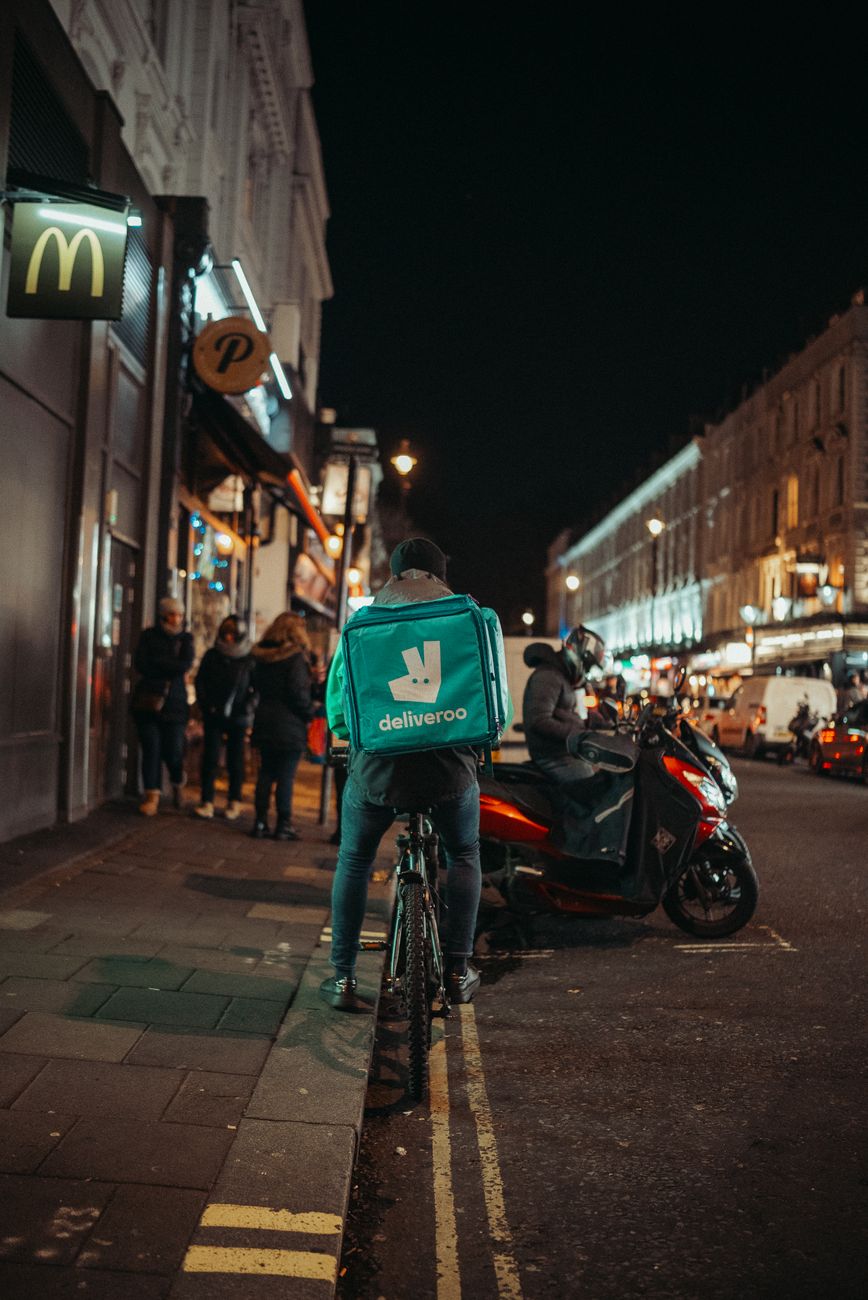
Deliveroo riders in the UK are classed as self employed, which means you may need to report your income to HMRC and pay tax on any profits you have.
An important thing Deliveroo riders need to remember is that if you do have to report your income to HMRC, it doesn’t neccessarily mean you are required to pay income tax.
Rules for Deliveroo tax
£1000 Trading Allowance: The good news is that if your total gross income from Deliveroo or other self-employed income does not exceed £1000, you don’t need to report it to HMRC or pay tax on it. This is known as your self-employed Trading Allowance.
Example 1: let’s say you work for Deliveroo at the weekends and over the course of the tax year you make £915.00 and have no other income. The amount is below the £1000.00 trading allowance threshold, which means you do not have to declare it to HMRC or pay income tax.
Example 2: if however you work as a Deliveroo rider and your gross Deliveroo pay, with no other income is £1300.00 for the entire tax year, you may then need to register for self-assessment and submit a tax return to HMRC.
Reporting to HMRC: recent changes mean that Deliveroo now automatically report your pay totals to HMRC. For drivers working for Deliveroo, this is part of the digital platform reporting rules (known as DAC7).
How much tax do I pay: you only pay income tax and national insurance contributions on the profits you earn from Deliveroo
Profits are the income you make from delivering food, minus your delivery driver expenses e.g phone, vehicle cost (petrol) or insurance.
Example: you earn £15,000 from Deliveroo in a tax year.
You have £2000 in allowable delivery driver expenses (eg: petrol, insurance and your mobile).
Your profit is… £15,000 – £2000 = £13,000 profit.
The first £12,570 of your profit is covered by your personal allowance, which means you pay tax on:
£13,000 – £12,570 = £430
You pay 20% income tax on £430 = £86.
Need help with your Deliveroo tax return?
- Get help with understanding Allowable expenses.
- We make sure your records and income are organised.
- Tailored support with your Self Assessment tax return.
Did you know that Ugo Tax specialise in supporting Deliveroo drivers across the UK and can help to sort your tax today.
Key dates to remember:
- You need to register for self assessment and get your UTR number by 5th October, after the end of your first tax year working as self employed.
- You also need to file your self assessment tax return and pay any tax that is due by 31st January after the tax year ends on 5th April.
- Want us to handle your tax return? Contact us

How do I pay less tax working for Deliveroo?
You can reduce the amount you get taxed on your Deliveroo pay by claiming all your delivery driver expenses.
These include:
Deliveroo Mileage Allowance for 2026/27: How much can you claim?
Vehicle mileage up until the 2026/27 tax year is 45p per mile for the first 10,000 business miles, and 25p per mile for every mile thereafter. Claiming vehicle mileage covers the cost of servicing, repairs, insurance and depreciation.
Recently, there has been an increase in the mileage rate. The 55p mileage claim for delivery drivers means that, from April 2026, the 45p per mile mileage allowance will increase to 55p per mile, and has been done to cover the increasing costs of fuel and insurance.
The mileage rate means that Deliveroo drivers that use a car or a van to deliver food can clam the 55p mileage allowance from 2026/2027 tax year. If however you use a motorcycle or bicycle the amount you can claim is different. See table below:
Deliveroo Mileage Rates For the 2026/2027 Tax Year
| Vehicle | Mileage Rate |
|---|---|
| Car or van – First 10,000 business miles | 55p per mile |
| Car or van – Business miles above 10,000 | 25p per mile |
| Motorcycle | 24p per mile |
| bicycle | 20p per mile |
Importantly claiming a vehicle mileage is an alternative way of claiming for vehicle costs such as insurance, servicing and maintenance. You are not allowed to claim vehicle costs as well as vehicle mileage.
Other Expenses
Mobile phone usage.
Gear and uniforms such as delivery bags, protective equipment or high vis clothing.
Accounting fees, Deliveroo commission and fees, as well as parking and toll fees.
Charging banks, phone holders and waterproof/protective cases.
A great tip we give to our clients to save tax is to make sure they record expenses on a daily and weekly basis.
This is because whether you work full time or part time for Deliveroo, you’re going to be very busy and may miss recording valuable expenses.
Doing so might mean you pay more tax than is required.

How much money should I save for paying my tax bill?
It’s a good idea to have a separate savings account when you work for Deliveroo. This is because, unlike when you’re employed, tax and National Insurance are automatically taken from your pay.
This doesn’t happen when you work for Deliveroo, so we recommend you save between 20-30% of your pay in a savings account, which will be helpful if you need to pay a tax bill.
Need help with your Deliveroo tax return?
If you work for Deliveroo and are stressed out about how to report, what expenses you claim or how much tax to set aside, Ugo Tax is here to help with submitting you self assessment tax return.
- Get help with understanding Allowable expenses.
- We make sure your records and income are organised.
- Tailored support with your Self Assessment tax return.


